Mission EVO: What the New Mobile Extraction Shooter Offers Tarkov Fans
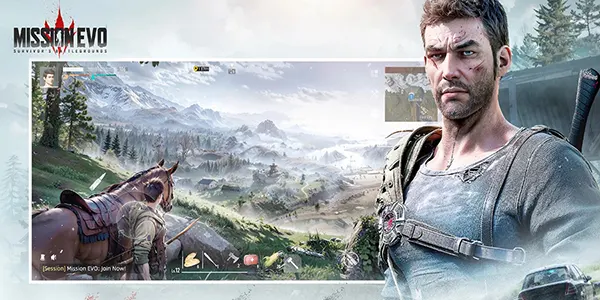
Mission EVO is a mobile-focused extraction shooter that clearly targets players familiar with hardcore titles like Escape from Tarkov. Announced as a cross-platform project with a strong emphasis on mobile play, the game aims to transfer high-risk gameplay, loot-driven progression, and tactical combat to smartphones without reducing complexity. As of 2025, Mission EVO stands out as one of the few projects attempting this genre seriously on mobile devices.
Core Gameplay and Extraction Mechanics
The foundation of Mission EVO is built around session-based raids where players enter contested zones, collect valuable gear, and attempt to extract safely. Each raid carries real consequences: lost equipment is not automatically returned after death, which encourages cautious movement, sound awareness, and strategic decision-making. This design closely mirrors the extraction philosophy familiar to Tarkov players.
Maps are structured with multiple extraction points that activate under specific conditions. Some exits may require special items, while others are time-limited or contested by AI enemies. This system forces players to adapt their route mid-raid rather than relying on a single predictable escape path.
Enemy encounters include both AI-controlled factions and real players. AI units patrol zones, guard high-value loot areas, and react dynamically to noise and gunfire. This layered threat model keeps raids unpredictable and rewards players who understand positioning and timing.
Risk, Loot Economy, and Progression
Loot in Mission EVO is not cosmetic filler but a functional part of survival. Weapons, armour, medical supplies, and crafting components directly affect raid outcomes. Higher-tier gear improves survivability but also increases the psychological pressure of loss, reinforcing the risk-versus-reward loop.
The in-game economy revolves around selling extracted items, upgrading personal storage, and crafting equipment. Players must manage limited inventory space, choosing between immediate profit and long-term progression materials. This mirrors systems usually seen only in PC extraction shooters.
Progression is character-based rather than purely account-level. Skills improve through use, such as weapon handling, stamina efficiency, and healing speed. This organic growth system encourages consistent playstyles and gives long-term players a measurable advantage without relying solely on monetisation.
Gunplay, Controls, and Mobile Adaptation
Adapting tactical shooter mechanics to mobile controls is one of Mission EVO’s main challenges. The developers have implemented a modular control scheme that allows players to customise sensitivity, button placement, and action priorities. This flexibility is essential for maintaining precision during close-quarters combat.
Shooting mechanics focus on recoil control, ammunition management, and weapon condition. Automatic fire is intentionally difficult to maintain, pushing players toward short bursts and deliberate shots. This design choice slows down combat pacing and aligns with the genre’s tactical roots.
Weapon modification plays a significant role, even on mobile. Attachments such as optics, grips, and suppressors meaningfully change weapon behaviour, allowing players to tailor loadouts for different raid objectives.
Performance, Optimisation, and Device Support
Mission EVO is designed to run on a wide range of modern smartphones, with scalable graphics settings that prioritise stable frame rates. On mid-range devices, visual effects are simplified, but gameplay systems remain intact, ensuring fairness across hardware tiers.
Network performance is critical for an extraction shooter, and the game uses region-based servers to reduce latency. As of 2025, test builds show consistent connection stability during firefights, which is essential for a high-stakes genre where milliseconds matter.
Battery consumption and heat management have also been addressed. Raids are time-limited to prevent excessive resource drain, making the game suitable for shorter play sessions without sacrificing depth.

Positioning Among Tarkov-Inspired Games
While several mobile shooters borrow surface-level ideas from hardcore PC titles, Mission EVO differentiates itself by committing fully to extraction mechanics. There is no automatic safety net for failed raids, and progression cannot be rushed without learning core systems.
The game avoids arcade-style shortcuts such as exaggerated aim assist or simplified damage models. Instead, it relies on realistic hit zones, armour penetration, and medical treatment systems, which will feel familiar to experienced extraction shooter players.
At the same time, Mission EVO remains more accessible than its PC inspirations. Tutorials, practice modes, and clearer interface design help new players understand mechanics without reducing overall complexity.
Who Mission EVO Is Designed For
Mission EVO is primarily aimed at players who already appreciate high-risk gameplay and strategic pacing. Fans of Escape from Tarkov, Arena Breakout, and similar titles will recognise many design philosophies and feel comfortable adapting to the mobile format.
For purely casual shooter players, the learning curve may feel demanding. Death has consequences, and success depends on planning rather than reflexes alone. This makes the game less suitable for short, distraction-based play.
As of 2025, Mission EVO represents a serious attempt to bring the extraction shooter genre to mobile without compromising its identity. Its success will largely depend on long-term support, balance updates, and how well the developers maintain trust within a demanding player community.