Blasphemous Mobile: Boss Difficulty, All DLCs and Touch-Control Adaptation
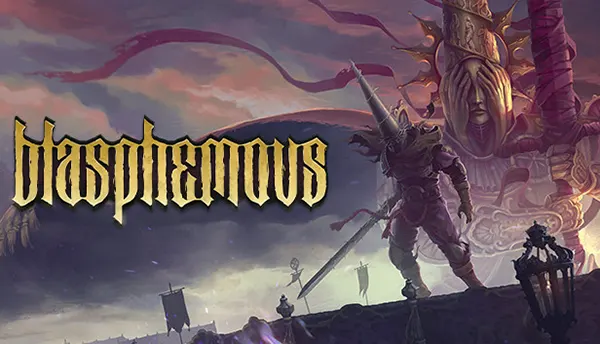
Blasphemous Mobile brings the complete first journey of the Penitent One to phones and tablets without reducing its scale, bleak atmosphere or demanding combat. The mobile edition retains the interconnected world of Cvstodia, the original story, every major boss and all three free DLC releases, while adding an interface designed for touchscreens and support for external controllers. That combination makes it far more than a shortened portable version: it is the full metroidvania, including late-game routes and optional challenges that can take many hours to complete. The important question is not whether the content survived the move to mobile, but how well a game built around exact movement, parries, dodges and repeated boss attempts works when physical buttons are replaced by an on-screen layout. As of 2026, several updates have addressed the most obvious control and device issues, although the toughest encounters still reveal the practical difference between touch input and a gamepad.
What Blasphemous Mobile Contains in 2026
The mobile release includes the complete base game and the free post-launch content issued for the original PC and console editions. A single purchase provides the main campaign, The Stir of Dawn, Strife & Ruin and Wounds of Eventide, with no advertising or microtransactions listed in the official store description. Players therefore receive the full arc of the first Blasphemous rather than a chapter-based conversion or a version that sells additional quests separately. Cvstodia remains an interconnected land filled with locked routes, relic-dependent passages, hidden rooms, side stories and optional bosses. Progress comes from learning the map, strengthening the Penitent One and understanding how prayers, rosary beads, sword hearts and Mea Culpa abilities affect different situations. The mobile edition preserves this structure, so completion involves much more than reaching the first ending.
By July 2026, Blasphemous is available through both the App Store and Google Play. The iOS listing requires iOS or iPadOS 16.0 or later, while Android compatibility depends on the device shown in Google Play. The latest version listed by Apple is update 1.9, released on 24 October 2025. That update included a Unity security revision and a further correction for touch controls. Earlier 2025 updates were more substantial: they added iPhone support, enabled offline play, improved memory use on devices with 4 GB of RAM, introduced tablet and iPad support, and allowed the position and size of touch buttons to be changed. These revisions matter because the initial mobile interface was not treated as final; The Game Kitchen continued to adjust it after release in response to device differences and control problems.
The content itself has not been simplified for smaller screens. The mobile edition retains the detailed pixel art, severe religious imagery, layered background work, full combat animations and the same enemy placements found in the complete game. It also includes the expanded voice work associated with the post-launch updates, including the Spanish voice option that suits the game’s Andalusian influences. Two display approaches are available on supported iOS versions: a pixel-perfect presentation and a scaling option intended to make better use of wider phone screens. Neither removes the basic limitation of playing a visually dense game on a compact display. Small projectiles, floor hazards and the start of an enemy animation can be harder to read on a phone than on a television or monitor, especially when fingers cover the lower corners of the image.
How the Metroidvania Structure Fits Shorter Sessions
Blasphemous is well suited to portable play in one respect: its world is divided into recognisable areas linked by Prie Dieu checkpoints, lifts, gates and shortcuts. A short session can be used to clear one route, recover lost Tears of Atonement, speak to an NPC or attempt a boss several times. The map also makes partial progress visible, which is useful when play is interrupted. However, it is not a game designed around brief daily tasks. Important quest lines can depend on visiting characters in a particular order, carrying the correct relic or returning to an earlier area after gaining a new ability. A long gap between sessions may make these connections harder to remember, particularly because the story is delivered through item descriptions, symbolic dialogue and environmental detail rather than frequent direct explanations.
The interconnected layout transfers cleanly to mobile because no areas have been removed or compressed, but movement-heavy rooms are more sensitive to control choice. Ladders, ledges, wall interactions and moving hazards often require a clear sequence of directional inputs. On a physical controller, the player can feel where the stick or directional pad sits without looking away from the action. On a touchscreen, the thumb can drift beyond the virtual control area, or a hurried movement can register at an angle. This rarely makes ordinary travel impossible, yet it can turn a familiar route into a less consistent one. Miriam’s timed challenge rooms from Strife & Ruin make the difference especially noticeable because missed jumps and delayed dashes cost time immediately.
Offline support, added in update 1.5, improves the practical value of the mobile edition for travel and commutes. Once the game is installed and working correctly, a constant connection is not needed for ordinary single-player progress. Tablets are generally the more comfortable option because they provide more space between the action and the touch buttons, and update 1.6 specifically introduced tablet support and control-size adjustment. Phones remain usable, particularly when the button layout is customised, but players with smaller displays may need to reduce visual obstruction while keeping important actions within easy reach. The best arrangement is personal: a large attack button may help during boss fights, whereas smaller utility buttons can leave more of the arena visible.
How Difficult Are the Bosses on Mobile?
The boss curve begins by teaching restraint rather than demanding perfect reactions. The Warden of the Silent Sorrow introduces basic attack timing, while Ten Piedad rewards staying close enough to respond without becoming trapped by its body and roots. Our Lady of the Charred Visage shifts the focus towards projectile reading, and Tres Angustias combines combat with a rising arena that punishes hesitation. These fights can defeat new players repeatedly, but their patterns are comparatively clear once the initial pressure fades. On mobile, the early bosses also reveal whether the chosen touch layout works. If dash, parry or healing requires an uncomfortable thumb movement, it is better to correct the layout at this stage than to accept unreliable input until the late game.
Mid-game encounters test different skills instead of following one fixed formula. Esdras, of the Anointed Legion, pressures the player with rapid movement and attacks that are easier to manage when parry timing is understood. Melquiades requires attention to supporting hands as well as the main body, while Expósito, Scion of Abjuration, makes target awareness more important than standing in one safe position. Quirce, Returned by the Flames, combines sudden entries, fire lines and changes in height, forcing the player to watch the whole arena. The variety prevents a single aggressive tactic from solving every fight. It also means that a prayer, rosary setup or sword heart that worked well in one area may be less useful in the next.
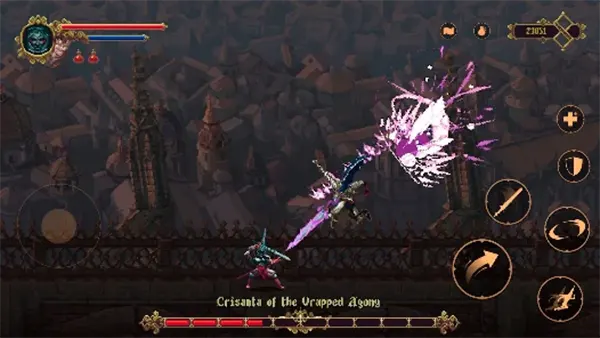
The late-game curve becomes much stricter. Crisanta of the Wrapped Agony can punish attacks made without a safe opening, and her speed places unusual pressure on parry and dodge timing. His Holiness Escribar and the Last Son of the Miracle form a multi-stage finale in which resources must be managed across more than one phase. Touch controls do not change enemy health or attack patterns, but they can increase the player’s practical workload. A thumb may need to move between attack, dash, parry, prayer and flask icons while the other controls direction. The game remains completable by touch, yet the final battles leave less room for an input that lands slightly late or on the wrong button.
The Encounters That Demand the Most Precision
Crisanta is one of the clearest tests of mobile control because the fight is built around disciplined responses. Repeated attacking is unsafe, and the player must recognise the difference between an opening and a feint. The Wounds of Eventide route can make this encounter more demanding by adding the conditions and extended confrontation linked to the true ending. A controller offers a clear advantage here because parry, attack and dash remain under separate fingers. Touch players can reduce the disadvantage by placing these three actions close enough for quick access without allowing their icons to overlap visually. Sound cues also help, particularly when a finger partly covers the lower edge of the arena.
The optional DLC bosses raise the ceiling further. Isidora, Voice of the Dead, combines quick close-range attacks with flames that restrict movement, creating a fight where the safest area changes rapidly. Sierpes uses a long arena and large sweeping attacks, so success depends on reading where the head and body will move rather than reacting only to the nearest threat. The Amanecidas from The Stir of Dawn appear during New Game+ and each uses a distinct weapon pattern; defeating all of them leads to Laudes, the First of the Amanecidas. These encounters assume that the player already understands the base game and owns a developed set of abilities. They are not simply stronger copies of earlier bosses.
Preparation matters, but Blasphemous rarely allows equipment to replace pattern learning. Health and fervour upgrades, improved bile flasks, suitable rosary beads and effective prayers can create more room for error, yet the hardest fights still reward patience. On mobile, the most useful preparation is to test the control arrangement before entering the arena. The flask button should not sit where it can be pressed accidentally, and the parry button must be reachable without releasing movement. Players who continue to miss simultaneous inputs should use a compatible controller rather than treating the touchscreen as a compulsory difficulty setting. The mobile edition officially supports both methods, so changing input does not reduce or alter the content.
Every DLC Included in the Mobile Edition
The Stir of Dawn is the largest systems-focused expansion. It adds True Torment, the game’s New Game+ mode, which becomes available after completing the main campaign. Players begin again with many acquired abilities and items but face a harder version of Cvstodia. The optional Penitence system changes the rules of a run and encourages different approaches to health, fervour and combat. The DLC also introduces the Amanecidas quest line, new bosses, new areas, NPCs, prayers, items, executions and additional fast-travel options. Its map and balance revisions became part of the complete game rather than remaining isolated extras. For mobile players, this means that a first completion is only the start of the most demanding boss content.
Strife & Ruin adds a crossover story featuring Miriam from Bloodstained: Ritual of the Night. Her quest centres on timed movement trials that ask the Penitent One to recover shards through rooms filled with traps and exact jumps. These sections are important when assessing the mobile adaptation because they place more emphasis on movement consistency than most of the main campaign. The expansion also adds Sacred Sorrows, a Boss Rush mode unlocked after the game has been completed, along with visual render options, an additional rosary bead and a hidden demake-style area inspired by older 8-bit games. Boss Rush gives experienced players a direct way to compare performance across encounters without repeating the entire map between attempts.
Wounds of Eventide is the narrative closing chapter of the first game. It adds new areas, items and two major optional bosses, Isidora and Sierpes, while creating a third ending that leads into Blasphemous 2. Accessing the full route requires decisions made before certain story battles, so an advanced save cannot always be redirected towards it at the last moment. The player must encounter Perpetva’s resting place before fighting Esdras and later follow the quest involving the Fourth Visage and the missing eyes. This structure makes Wounds of Eventide more than a final boss pack: it changes the meaning of existing events and asks the player to complete a carefully ordered pilgrimage through familiar and new parts of Cvstodia.
How Touch Controls Change the Original Design
The default touchscreen layout places movement on the left and combat actions on the right, translating a control scheme built for several physical buttons into a set of visible icons. Basic exploration and ordinary enemies work reasonably well once the player learns the spacing, but crowded encounters expose two limitations. First, a finger can hide an enemy, projectile or floor hazard. Second, actions that would normally be assigned to separate fingers may require one thumb to move between several icons. Blasphemous depends on committed animations and deliberate timing, so an accidental press is more costly than it would be in a forgiving action game. The adaptation therefore succeeds best when the layout is treated as something to configure rather than accept unchanged.
The available options are considerably better than they were at launch. Update 1.3 added iPhone support, a choice between a floating and fixed virtual stick, gameplay-button remapping and a more practical default map command for gamepads. Update 1.6 added tablet and iPad support together with settings for changing the position and size of touch controls. Update 1.7 corrected a problem that prevented those changes from being saved properly on tablets, and update 1.9 addressed another touch-control issue. These revisions do not turn glass into physical buttons, but they allow players to build a layout around hand size, screen dimensions and preferred actions instead of relying on one universal arrangement.
Touch input is a credible way to complete the main story, especially for players accustomed to demanding mobile action games. It also offers the convenience of playing without carrying another device. A gamepad remains the more reliable choice for Boss Rush, Miriam’s timed rooms, the Amanecidas and the hardest Wounds of Eventide fights, where several inputs may be needed within a short interval. The strongest aspect of Blasphemous Mobile in 2026 is that it does not force one method. It preserves the complete game, supports offline sessions, offers adjustable controls and accepts compatible controllers. Its mobile adaptation is therefore faithful rather than effortless: the content is intact, but the original difficulty still expects concentration, pattern recognition and precise execution.