Arknights: Endfield on Smartphones: Combat, World Exploration and Base Development

Arknights: Endfield brings the Arknights universe into a 3D real-time strategy RPG built around three closely connected parts: squad combat, travel across the hostile world of Talos-II, and the gradual construction of an industrial network. Since its global release in January 2026, the game has been available on both iOS and Android, allowing the same account progress to be used across supported devices. The mobile edition contains the main story, operator progression, exploration activities and Integrated Industry systems found in the wider release, while its interface and construction controls have been adapted for touchscreens. This combination makes Endfield more than a sequence of battles: progress regularly moves between fighting enemies, reaching new areas, collecting materials and improving the infrastructure that supports further expansion.
How Combat Works on Smartphones
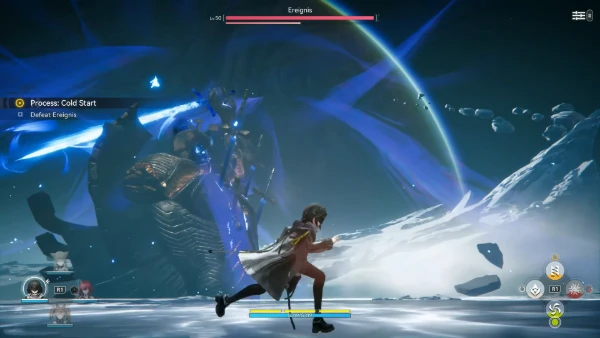
Combat in Arknights: Endfield takes place in real time and focuses on controlling a squad of operators rather than a single isolated fighter. The player directly controls the active character while the other members of the team remain present on the battlefield and contribute to the encounter. This creates a different rhythm from a conventional mobile action RPG in which unused characters simply wait outside combat until they are selected. Positioning, the order in which abilities are used and the way different operators support one another all matter, so building a squad is not only a question of choosing characters with the highest individual statistics.
On a smartphone, regular movement and combat actions are arranged around touch controls, with frequently used commands kept within easy reach. Basic attacks provide the foundation of each encounter, while operator abilities create stronger effects, interrupt opportunities or combinations with other squad members. The game also allows players to switch their attention between characters as the situation changes. This is particularly useful when one operator is better suited to dealing with a dangerous target, applying an effect or creating an opportunity that another squad member can use. Endfield therefore asks the player to watch what the whole team is doing instead of repeatedly using one attack with the currently selected character.
The battle system has continued to change during 2026. Official updates have refined targeting priorities, skill effects and general combat readability, including options that allow the visual intensity and opacity of team-mate skill effects to be adjusted. Stronger enemies can also require more deliberate timing because the game includes a stagger system: pressure can build towards moments when an opponent briefly becomes more vulnerable or loses its ability to respond normally. These mechanics add tactical decisions without turning every ordinary fight into a complicated exercise. For mobile players, the practical result is a battle system that can be understood through normal play but still rewards learning how individual operators work together.
Squad Synergy, Skills and Mobile Controls
A useful Endfield squad is built around interaction between operators. Characters differ not only in weapon type and damage output but also in the effects created by their skills. Some attacks are valuable because they prepare an enemy for a follow-up, while others become more effective when the correct condition has already been created. As the roster grows, players can therefore form teams around complementary abilities rather than treating every new operator as a direct replacement for an older one. This makes experimentation important, especially when a difficult encounter exposes a weakness that was not obvious during ordinary exploration.
Timing is just as important as team composition. Spending powerful abilities immediately may clear a weak group quickly, but saving them can be more useful when a stronger enemy is about to attack or when several opponents move into the same area. Bosses and tougher elite enemies make these decisions more noticeable because they survive long enough for the player to recognise attack patterns and choose safer moments to commit stronger skills. The game has also refined targeting options during its 2026 updates, giving players more control over which enemies are prioritised by skills, active lock-on and assisted targeting.
Touch controls are not the only option on mobile devices. Endfield officially supports compatible PlayStation and Xbox controllers on smartphones, using either supported wired connections or Bluetooth depending on the device and controller. The game can change to a controller-oriented interface after detecting gamepad input and return to touch controls when the screen is used again, although switching layouts is restricted during certain tutorials, story scenes and specific combat situations. This gives smartphone players a practical choice: touchscreen controls work for portable sessions, while a controller can be useful for longer battles or for players who prefer physical buttons.
Exploring Talos-II from a Mobile Device
Talos-II is not presented simply as scenery between combat missions. The setting is divided into large explorable areas where the player follows story objectives, searches for resources, encounters hostile creatures and reaches locations connected with Endfield Industries. The game’s background describes humanity as having established the Civilization Band after more than 150 years of settlement, while extensive wild regions remain dangerous and only partly developed. That premise is reflected directly in play: moving into new territory often means dealing with threats and logistical problems before an area becomes convenient to use.
Exploration has several practical rewards. Materials gathered in the field feed character progression and industrial activity, while storage containers and other points of interest provide additional resources. Main missions lead players through important locations, but exploration missions and side missions give reasons to revisit regions rather than treating them as routes used once during the story. Updates released throughout 2026 have continued to add exploration assignments and settlement-related objectives. The September Snowy Dreams update, for example, added further exploration tasks alongside new side stories, showing that regional activity remains part of the game’s continuing content rather than only an early-game feature.
Movement through these areas gradually becomes easier as the player’s infrastructure improves. Endfield links travelling with construction through shared devices, power connections and transport systems placed around the environment. Zipline routes are one example: once suitable connections exist, they can shorten repeated journeys through familiar territory. The map consequently changes in practical ways as progress continues. A location that initially requires a longer walk and several enemy encounters can later become easier to reach because the surrounding network has been developed. This relationship between travel and construction is one of the main reasons exploration and industrial management feel like parts of the same progression system.
Resources, Routes and Activities Beyond the Main Story
Leaving the direct story route is usually useful because many resources have a purpose elsewhere. Materials gathered while travelling can contribute to production, equipment and other forms of progression, while regional activities support the broader development of the areas controlled by Endfield Industries. This creates a natural reason to pay attention to the environment instead of moving only from one quest marker to the next. The player is repeatedly encouraged to remember useful resource locations, convenient routes and unfinished activities that may become relevant when a new production requirement appears.
The structure also gives shorter mobile sessions a clear purpose. A player does not always need enough time for a major story sequence or a demanding boss encounter. A brief session can instead be used to collect nearby materials, deal with an unfinished exploration objective, check regional production or improve a route that will be useful later. Longer sessions can then focus on new story chapters, difficult fights or substantial construction work. Because these activities feed into one another, smaller tasks still contribute to progression rather than feeling entirely separate from the main game.
Endfield has continued to expand this side of the game after launch. During 2026, official updates introduced additional exploration quests, permanent puzzle-oriented activities and new settlement construction assignments. Some content also becomes available according to the player’s exploration progress rather than appearing immediately after an update. That approach helps the game maintain a sense of regional progression: access to everything is not simply placed in a menu on the first day of a new version. Instead, story advancement, exploration and construction continue to determine which activities become relevant next.
Building and Developing the Endfield Industry Network
Construction is the feature that most clearly separates Arknights: Endfield from many character-based action RPGs on smartphones. Its Integrated Industry system allows players to place equipment and create production routes that process resources instead of relying entirely on fixed menus. Conveyor belts, pipes, power connections, splitters and related structures can be arranged to move materials through different stages of production. The objective is not merely to decorate a headquarters. A useful industrial layout turns collected resources into a working supply chain that supports equipment, regional construction and continued exploration.
The system starts with relatively understandable production tasks and becomes broader as additional equipment and regions become available. A basic arrangement may take one material from storage to a machine and then send the result onwards, while more developed layouts can divide resources between several destinations or combine different production needs. Power is also important because equipment needs a functioning energy network. Players therefore have to think about where facilities are placed, how goods move between them and whether sufficient electricity reaches the structures that need it. The underlying idea is similar to building a small automated factory, although the game introduces its parts gradually rather than demanding a complex design immediately.
Regional construction gives these factories a wider purpose. Production and exploration contribute to the development of specific areas, while regional rewards can in turn support operators, equipment and further construction. The system has received repeated quality-of-life changes since release. Official 2026 updates improved power management, information screens and the handling of transport networks, and the developers have continued adjusting construction tools on smartphones. As a result, base development is not an isolated management mode: it sits between resource gathering and character progression, giving materials collected in the field a longer-term use.
Managing a Factory Efficiently on a Smartphone
Mobile construction is helped by an overhead view designed for arranging equipment across a larger area. Before the public release, the developers specifically improved this mode on smartphones, including the feel of placing conveyor belts and the way pipes can be handled in groups. Connection indicators were also refined so that it is easier to see whether logistics equipment is properly linked. These details are important on a smaller display because factory layouts can quickly become difficult to read if several belts, machines and power routes occupy the same part of the screen.
A sensible approach is to keep early layouts easy to understand rather than trying to create the most compact possible arrangement. Leaving space around important machines makes later changes less frustrating, especially when a new recipe or production target requires an extra belt or another output route. It is also worth checking whether an apparent production problem is actually caused by power or transport before rebuilding an entire line. Updates in 2026 have made this easier to manage, including improvements to electricity distribution and additional regional overview tools that help players see where important tasks and facilities are located.
The strongest feature of Endfield’s base development is the way it feeds back into the rest of the game. A better industrial network produces useful materials more consistently; those materials support equipment and development; stronger operators make difficult exploration and combat more manageable; and progress in new regions creates further construction opportunities. On smartphones this cycle works particularly well for players who alternate between short management sessions and longer periods of active play. Combat, travel and industrial development are therefore not three unrelated modes but parts of a single progression loop that has continued to grow through the game’s 2026 updates.