Marvel Snap in 2026: Meta, Deck Archetypes and the Real Pace of Competitive Play
Marvel Snap has evolved far beyond its 2022 launch foundations. By 2026, it stands as one of the most refined digital card battlers on mobile, balancing short match duration with surprisingly deep strategic layers. Frequent card releases, location rotations and seasonal balance patches have reshaped the competitive landscape. The result is a meta that rewards adaptability, precise cube management and a clear understanding of tempo. This analysis examines the current competitive environment, the most reliable deck archetypes and how match pacing truly influences ranked success in 2026.
The 2026 Competitive Meta: Balance Philosophy and Dominant Trends
In 2026, Second Dinner’s balance philosophy focuses on small but frequent adjustments rather than drastic overhauls. Monthly patches target overperforming synergy clusters instead of single headline cards. This approach has reduced extreme dominance cycles and encouraged mid-tier archetypes to remain viable across multiple seasons.
The current meta revolves around flexible midrange control, scalable power engines and refined disruption tools. Pure combo decks still exist, but they no longer dominate ladder play as they once did during earlier Shuri or Thanos-centric periods. Instead, consistent cube gain strategies outperform high-variance builds in long climbing sessions.
Another defining element of the 2026 environment is location awareness. With expanded location pools and limited-time competitive rotations, successful players build decks that tolerate randomness. Lists that collapse under specific location restrictions rarely sustain high win rates across a full ranked season.
Key Archetypes Shaping High-Rank Play
Three archetypes consistently define upper Infinite and Conquest tiers: Flexible Control, Scalable Ongoing Engines and Refined Destroy Variants. Flexible Control combines tech cards, tempo tools and late-game swing pieces, allowing adaptation to opponent strategies without sacrificing raw power.
Ongoing-based engines remain competitive due to improved internal balance. Rather than relying on a single explosive finisher, these decks layer incremental advantages across turns four to six. Cards that double or redistribute ongoing effects have regained prominence, but they now require tighter sequencing and risk assessment.
Destroy archetypes in 2026 are less explosive than in earlier years yet more stable. Instead of chasing maximum theoretical output, modern lists prioritise efficient early destruction, card cycling and predictable endgame scaling. This consistency makes them particularly effective in extended Conquest runs.
Deck Construction in 2026: Efficiency, Synergy and Tech Choices
Deck building has become more deliberate and data-driven. With community statistics widely available and balance updates occurring frequently, competitive players focus on marginal advantages. Card slots are rarely “flex for fun”; each inclusion answers a specific matchup or improves cube equity.
Energy curve discipline is stricter than in previous years. Successful decks avoid overloaded six-cost packages unless the finisher provides measurable cube pressure. Many top-tier builds now rely on powerful four- and five-cost interactions that allow controlled snapping before the final reveal.
Tech cards are more influential than ever. Instead of hard counters that completely invalidate strategies, 2026 tech options apply soft disruption—reducing ceiling rather than eliminating it. This creates skill-based interactions where prediction and timing determine impact.
Cube Management as a Core Strategic Layer
Understanding the Snap and Retreat system remains the single most important competitive skill. In 2026, the skill gap is less about raw win rate and more about cube efficiency. Players at the top ranks retreat earlier and snap more selectively than mid-tier competitors.
Modern deck design reflects this philosophy. Many archetypes are engineered to generate clear information by turn four. If a win condition is unlikely due to locations or revealed opponent synergies, experienced players retreat immediately, minimising cube loss.
Conversely, well-timed snaps now occur before final-turn power spikes. Waiting until turn six to snap often signals desperation rather than strength. High-level play involves building credible pressure early enough that the opponent must decide under uncertainty.
The Tempo of Matches: Why Six Turns Still Feel Fast
Despite multiple systemic updates, Marvel Snap retains its six-turn structure. However, tempo in 2026 feels more layered than at launch. Power swings are more distributed across turns rather than concentrated in single explosive reveals.
Turn sequencing has grown more technical. Priority management—once a secondary concern—now plays a decisive role in match outcomes. The order of reveals can determine whether disruption lands successfully or fails entirely, especially in control-heavy matchups.
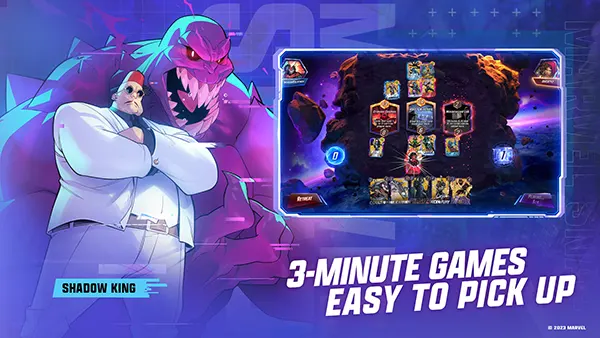
Match duration remains short in real time, typically three to four minutes, yet decision density has increased. Each turn carries higher informational weight, particularly when both players delay snapping to gather location data and card signals.
Conquest Mode and Long-Form Strategy
Conquest mode in 2026 rewards consistency over volatility. Unlike ladder play, where quick cube gains can compensate for variance, Conquest demands stable performance across multiple rounds against the same opponent. Decks with predictable scaling outperform fragile combo builds.
Adaptation between rounds has become a defining skill. Recognising patterns—such as an opponent’s reliance on a single lane strategy—allows targeted snapping in later rounds. The psychological dimension of repeated encounters amplifies the importance of timing and restraint.
Ultimately, tempo in Marvel Snap is not about speed alone. It is about informational pacing: when you reveal intent, when you apply pressure and when you withdraw. In 2026, the players who understand this layered tempo consistently outperform those who rely purely on card strength.